Artificial Intelligence (AI) is revolutionizing industries worldwide, and education is no exception. As we enter a new era of digital transformation, STEM (Science, Technology, Engineering, and Mathematics) education is evolving rapidly with AI-driven tools and methodologies. Schools are embracing AI-powered technologies to create more engaging, personalized, and efficient learning environments that prepare students for future careers in a technology-driven world. In this blog, we will explore how AI is transforming STEM education, its benefits, challenges, and the potential it holds for future generations of learners.
1. The Need for AI in STEM Education
STEM education is the foundation of technological innovation, scientific research, and industrial advancements. However, traditional teaching methods often fail to keep up with the rapid pace of scientific discovery and the evolving job market. Many educators face the challenge of engaging students effectively, providing personalized learning experiences, and bridging the gap between theory and real-world applications. This is where AI plays a crucial role. By integrating AI into STEM education, schools can:
By leveraging AI, STEM education can move beyond textbooks and lectures into an immersive and interactive learning experience that better prepares students for the future.
- Enhance Learning Efficiency – AI-powered tools provide real-time feedback, allowing students to learn at their own pace.
- Personalize Education – Adaptive AI algorithms analyze students’ strengths and weaknesses and tailor lesson plans accordingly.
- Improve Engagement – AI-driven simulations, VR/AR technologies, and gamified learning platforms make STEM subjects more interactive and fun.
- Support Teachers – AI-powered teaching assistants help teachers by automating administrative tasks and providing insights into student performance.
2. How AI is Transforming STEM Classrooms
AI is revolutionizing STEM education by making learning smarter, faster, and more engaging. Here are some key ways AI is reshaping the classroom experience
2.1 Personalized Learning with AI Tutors
AI-powered intelligent tutoring systems (ITS) act as virtual mentors for students.
These systems analyze student performance, identify knowledge gaps, and provide
customized lessons and exercises. Platforms like Khan Academy, Squirrel AI, and
iSMART AI Teacher Robot use AI to provide personalized learning paths, ensuring that
each student learns at their own pace.
Example:
Imagine a student struggling with trigonometry in a math class. An AI tutor can
detect the student’s weak areas, adjust lesson difficulty, and offer targeted
practice exercises to improve their understanding.
2.2 AI-Powered STEM Labs and Robotics
Robotics and automation are becoming integral to STEM education. AI-powered robotics kits and hands-on learning experiences help students develop problem-solving skills, creativity, and logical thinking. Schools are integrating platforms like LEGO Mindstorms, iSpark Robotics Kits, and Raspberry Pi-based AI projects to make learning practical and interactive.
Benefits
- Encourages hands-on learning
- Enhances critical thinking & coding skills
- Prepares students for careers in AI, robotics, and engineering
2.3 Virtual & Augmented Reality in STEM Education
AI-driven Virtual Reality (VR) and Augmented Reality (AR) are revolutionizing how
students learn STEM concepts by creating immersive learning environments.
Example:
- VR Science Labs: Students can conduct virtual chemistry experiments without handling real chemicals, ensuring safety and accessibility.
- AR Math Apps: AI-powered AR apps allow students to visualize geometrical concepts in 3D, making math more engaging.
2.4 AI in Data Science and Coding Education
With the rise of Big Data and Artificial Intelligence, students need to develop
coding and data analysis skills from an early age. AI-powered coding platforms like
Google’s Teachable Machine, MIT Scratch, and Code.org simplify the learning process
by providing interactive coding challenges and real-time feedback.
Impact:
- Encourages students to develop AI models early in their education.
- Helps students build logical thinking and problem-solving skills.
- Prepares them for careers in data science, AI, and software development.
3. The Benefits of AI in STEM Education
3.1 Increased Engagement and Motivation
Traditional learning can sometimes feel dull and repetitive, but AI makes education
more interactive and engaging. AI-driven gamification, quizzes, and simulations keep
students motivated and excited to learn.
Example:
- AI-powered chatbots make learning conversational and fun.
- AI storytelling platforms allow students to create their own science fiction stories while learning STEM concepts.
3.2 Bridging the Gap Between Theory and Application
AI helps students apply theoretical knowledge to real-world problems. AI-powered
simulations and AI-based engineering projects give students hands-on experience in
robotics, coding, and automation.
Example:
A high school student can build an AI-powered weather prediction model using
real-time climate data, bridging the gap between classroom learning and real-world
applications.
3.3 AI-Powered Assessment and Feedback
AI eliminates the one-size-fits-all approach to assessments. Instead, it provides
real-time, data-driven insights into student performance. AI-powered grading systems
and analytics dashboards help teachers identify learning gaps and adapt teaching
strategies accordingly.
Example:
AI systems like Google’s Socratic App analyze student responses and suggest
personalized improvement strategies.
4. Challenges and Ethical Considerations
While AI brings many benefits to STEM education, there are also challenges that schools must address
4.1 Digital Divide and Accessibility
Not all schools have access to AI-powered tools, especially in rural areas. Ensuring equal access to AI-based education is crucial for bridging the digital divide
4.2 Teacher Training and Readiness
Teachers need to be trained to integrate AI into their curriculum effectively. Schools must invest in teacher training programs to ensure a smooth transition to AI-powered learning
4.2 Teacher Training and Readiness
Robotics and automation are becoming integral to STEM education. AI-powered robotics kits and hands-on learning experiences help students develop problem-solving skills, creativity, and logical thinking. Schools are integrating platforms like LEGO Mindstorms, iSpark Robotics Kits, and Raspberry Pi-based AI projects to make learning practical and interactive.
4.3 Ethical Concerns & Data Privacy
AI in education collects vast amounts of student data. Ensuring data privacy, cybersecurity, and ethical AI usage must be a priority for schools and EdTech companies.
5. Future of AI in STEM Education
The future of AI in education is bright and full of possibilities. In the coming
years, we can expect:
- AI-powered personalized textbooks that adapt to each student’s learning style.
- AI-driven career counseling to guide students toward future career opportunities.
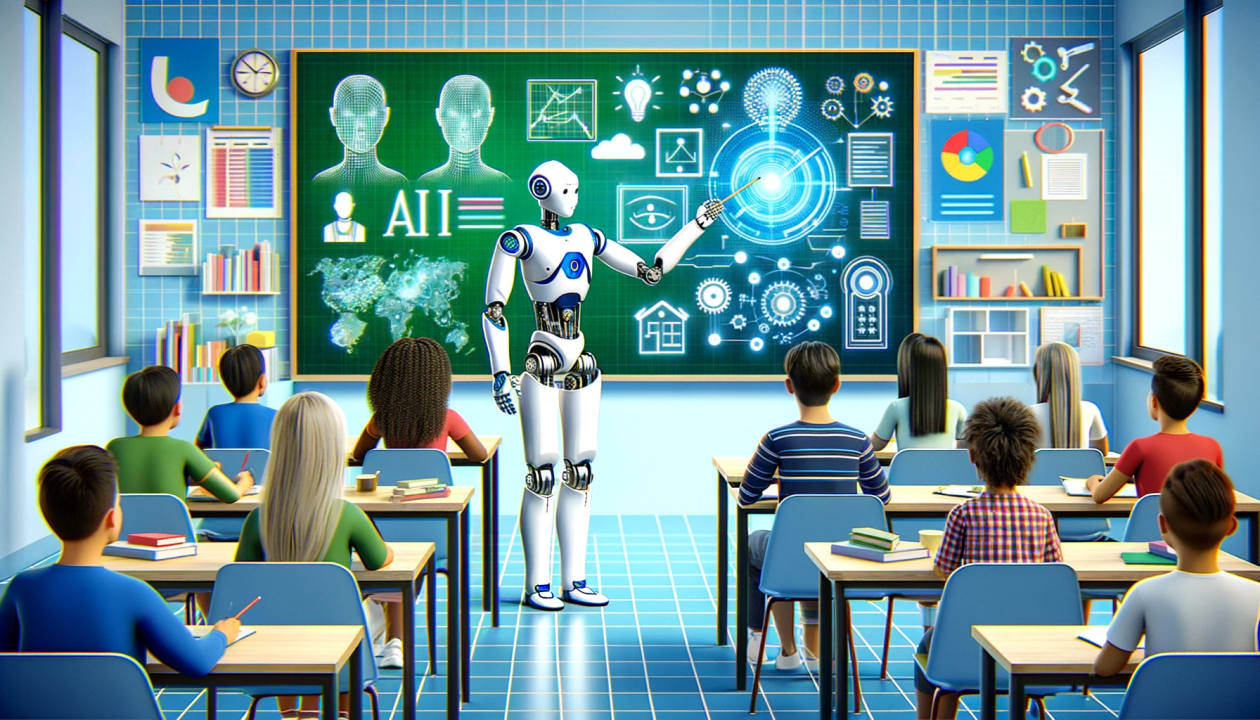
- Advanced AI humanoid teacher robots, like iSMART, capable of answering questions, evaluating student performance, and conducting lessons autonomously.
6. Conclusion
AI is redefining STEM education by making learning more personalized, interactive,
and hands-on. From AI-powered tutors and robotics labs to VR simulations and
real-time assessments, the classroom of the future is becoming smarter and more
innovative.
At iSpark Learning Solutions, we are committed to integrating AI-driven STEM
education into schools, ensuring that students are future-ready for careers in AI,
robotics, and data science.
The future of education is AI-powered – are we ready to embrace it?
Leave a Reply
Your email address will not be published. Required fields are marked *